
Projects & Research
Learn about COE’s work in research and practice
Featured
Check out some of the latest research highlights from our COE community

PLAY for All has the Potential to Benefit All
Dr. Allison Tsuchida, Assistant Professor in the Department of Kinesiology and Rehabilitation Science (KRS), is the Director of the Physical Literacy and Activities for Youth (PLAY) for All motor clinic. The PLAY for All clinic is an inclusive community-based afterschool program that aims to increase physical activity opportunities for all children via standards-based activities. KRS undergraduate students enrolled in KRS 443 Disability and Diversity and graduate students learn to work with children of varying motor abilities, implement inclusive activities, and collaborate with peers and faculty. The PLAY for All clinic is a host to various research projects for students and faculty.
“P.L.A.Y. for All Pilot: Effects of a Community-Based, Inclusive After-School Program on Physical Activity and Motor-Skill Outcomes” highlights this importance of increasing physical activity opportunities for all children and youth because quality programming can increase motor skill ability, parent and child physical activity engagement, and parent support of physical activity. These benefits can translate to improved overall health and long-term physical activity engagement. More work has yet to be completed but there have been interesting findings in the way parents perceive their child’s motor ability and their own motor ability, goals that parents have for their child’s participation in physical activity, and positive preliminary findings in regard to parent-reported child quality of life scores from clinic participation. Stay tuned for more!
Tsuchida, A.R., Centeio, E.E., & Hennebach, K.R. (2025). P.L.A.Y. for All pilot: Effects of a community-based, inclusive after-school program on physical activity and motor-skill outcomes. International Journal of Physical Activity and Health, 4(3), Article 2.


Deepening Computational Thinking by Leveraging Student and Community Knowledge
Dr. Clare Baek, Assistant Professor in Learning Design and Technology, is expanding her work on culturally sustaining computer science curriculum in Hawaiʻi. Through an NSF-funded project initiated with colleagues at UC Irvine, Baek and her collaborators co-designed, with teachers and administrators from school districts across Southern California, a curriculum that integrates computer science with community-based environmental literacy and data literacy. Rather than learning coding as an isolated technical skill, students use computing to investigate environmental issues in their communities, collect and analyze data, research solutions, and communicate their ideas through interactive projects created with Scratch (a block-based coding language).
A case study with multilingual elementary students with disabilities found that participation in the curriculum supported students’ motivation to learn computer science and development of computational thinking while building on their knowledge and experiences within their communities (Baek et al., 2025). Embedded scaffolds and supports in the curriculum helped students with diverse learning needs meaningfully participate in the interdisciplinary learning experience.
Baek is now expanding this work to Hawaiʻi, collaborating with local teachers to adapt the curriculum to the knowledge and experiences of Hawaiʻi students and communities. Dr. Baek states, “Through this research, I want to show that computing education goes beyond just learning technical skills. Computing can be a powerful tool that gives all students agency to problem-solve, create, and communicate for their communities in innovative ways.”
Baek, C., Saito-Stehberger, D., Nam, A., Lopez, G., Jacob, S., & Warschauer, M. (2025). Empowering Latine elementary school students with disabilities: Computer programming through culturally sustaining curriculum. Computer Science Education, 35(4), 669-694. [Link to PDF]


Voyaging Toward Mathematical Unity Through Ethnomathematics: Faculty and Doctoral Students Address Research & Praxis
UH Mānoa College of Education (COE) Professor of Mathematics Education Linda Furuto was chosen by the American Mathematical Society (AMS) to deliver this year’s prestigious Einstein Public Lecture at the AMS Spring Western Sectional Meeting at Boise State University on March 7–8, 2026. The keynote speech, titled “Voyaging Toward Mathematical Unity Through Ethnomathematics”, provided insights about mathematics that can be drawn from the study of ethnomathematics and demonstrated research-based approaches to support equitable teaching and learning environments.
Furuto was accompanied by three PhD students from the COE and Department of Mathematics, *Phillippe Rivera Fernandez-Brennan, Joseph Manfre, and *Swarnalakshmi “Janani” Lakshmanan who presented their research in sessions during the conference, along with Michelle Manes, Deputy Director at the American Institute of Mathematics (AIM). All four are graduates of the COE Ethnomathematics Graduate Certificate.
Ethnomathematics research shared at the AMS Meeting focused on real-world problem-solving that empowers students to be locally-minded, global citizens through rigorous, relevant, and contextualized mathematical tasks that.draw on their strengths and the strengths of their communities. For example, Fernandez-Brennan shared connections between a decolonization education framework and K–12 curriculum and pedagogical recommendations to ethnomathematics. Manfre’s presentation, Mathematics as a Noun versus a Verb: Implications of the Dichotomy’s Positionality in K-12 Education, explored the implications of what happens when the various stages of mathematics are positioned as nouns versus verbs within varied contextual environments while considering mathematics’ overall philosophical, psychological, and ecological purpose.Lakshmanan’s session addressed the impact of proof-based mathematics on female-identifying perceptions of place-based mathematics.
*Phillippe Rivera Fernandez-Brennan and Swarnalakshmi “Janani” Lakshmanan successfully completed their PhD programs and graduated in Spring 2027.
To learn more, explore ethnomathematics, research, and the curriculum library:

Linda Furuto
lfuruto@hawaii.edu

Case Study of a High School Transformative Leadership Class: A Research-Practice Partnership
Dr. Lois Yamauchi, Professor of Educational Psychology and Chris Zorn, Teacher at University Laboratory School developed and implemented a collaborative research project in 2024-2025. Their project A Case Study of a High School Transformative Leadership Class, focused on eco-social change and student voice.
Chris taught the Global Leadership Laboratory class for 10-12th graders, an elective course designed to promote self-, ecological- and social-awareness, practical leadership skills, and increase a sense of personal agency for co-creating positive change in the world. As part of this project, Chris utilized a curriculum that integrated contemplative and transformative educational practices. The contemplative practices focused on reflecting on values, taken for granted beliefs and learners’ gifts and predilections. They included guided journaling and dialogue practices related to interdisciplinary topics about ecological and social literacy that were often beyond what was familiar to students. Over time, these daily practices transformed how students related to themselves, each other, and their worldviews.
Chris and Lois designed a case study to examine outcomes for students who participated in this class. Over the school year, Lois interviewed students and observed class sessions, while Chris collected student artifacts and took field notes. Lois and Chris collaborated with two others on this work, faculty member Madiha Jamil and Kalem Ringlem, an undergraduate student interested in gaining research experience. This team’s collaboration was beneficial for each educator and resulted in the development of manuscripts and a presentation at the International Conference on Education and Justice. This innovative project exemplifies how educator-researchers brought together different lenses and approaches to design a cross-disciplinary and cross-institutional inquiry.
Explore the Curriculum Used for this Project:
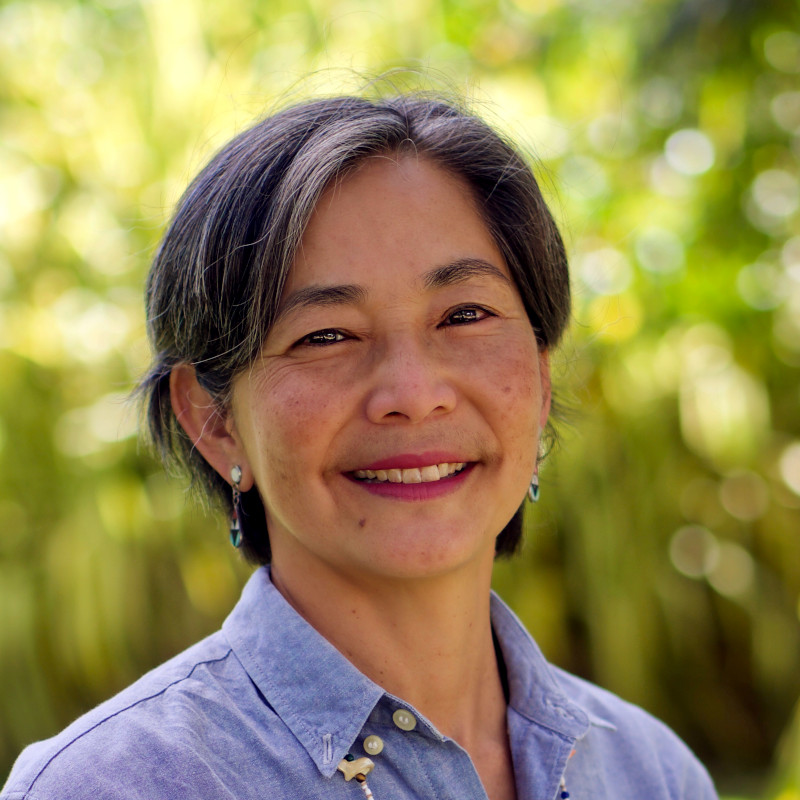


Dual Enrollment Participation and Immediate College Enrollment: Investigating Socioeconomic and Ethnic Disparities Among Hawai‘i Public High School Students Through a Multilevel Model
Congratulations to Dr. Warren Kawano who earned his doctoral degree from the PhD in Education program- Educational Administration concentration in Spring 2025.
Warren’s dissertation researchexamined how dual enrollment in Hawai‘i’s Early College program, which allows high school students to take college classes for credit, affects whether Hawai‘i public high school graduates enroll in college immediately after graduation. Using data on student demographics, academics, and school characteristics, multilevel logistic regression models were used to explore how participation in Hawai‘i’s Early College program relates to immediate college enrollment, with a focus on students from low-income families and underrepresented ethnic groups.
Results showed that students who participated in dual enrollment were much more likely to enroll in college immediately after high school. In fact, participation in Early College was associated with a 90.4 percent increase in the odds of enrolling in college; however, the impact was not the same for every group. Pacific Islander students gained the most from participation, while Native Hawaiian and Filipino students experienced smaller benefits compared to their peers.
Overall, the findings highlight the promise of dual enrollment as a strategy to boost college-going rates, particularly among students who have historically been underrepresented in higher education. Expanding access to these opportunities can help close equity gaps and ensure more Hawai‘i students make the transition to college.
Advisor Statement from Dr. Chris Lucas, Associate Professor & Department Chair, Educational Administration:
Dr. Warren Kawano produced an excellent dissertation inclusive of key findings with clear applications for education in Hawai’i. His study also adds important new considerations to the literature as well as represents the lone example in the field of how dual enrollment patterns occur within a single localized Department of Education system. Each dissertation committee member contributed well-matched advice and genuine support for the study. On behalf of the committee and Warren’s original advisor, Dr. Ron Heck who sadly passed away in 2023, we are proud of Warren’s work and are looking forward to his future efforts at improving educational practice.

Warren Kawano
warrenk@hawaii.edu

Promising Yet Challenging: Ethnographic Insights On Head Start Teachers’ Language Policy Negotiations In New Immigrant Settlements
Dr. Kiyomi Umezawa, Assistant Professor in Curriculum Studies, conducted a comparative ethnographic study on Head Start teachers’ language ideologies and policy implementation. Curious about how Head Start teachers understand and implement the policy to recognize children’s home languages as assets and incorporate them into classroom practices, Dr. Umezawa interviewed educators at four sites. She describes the emerging findings from her interviews: “I found that the journey of the policy was not straightforward. Much like the game of telephone, each agency that passes the policy to the next reflects its own understanding and modifies it.” The study highlights that maintaining bilingualism in young children requires intentional, culturally responsive teaching practices, and emphasizes the crucial yet often-overlooked role of teachers as key policy actors who can drive equitable bilingual education from the ground up.
Umezawa, K. (2025). Promising yet challenging: Ethnographic insights on Head Start teachers’ language policy negotiations in new immigrant settlements. International Critical Childhood Policy Studies journal, 12(1), 99-114.


Insights from Teachers for Learning with ʻĀina, Community, and Place
Dr. Brooke Ward Taira, Associate Professor of Literacy Education and Dr. Summer Maunakea, Associate Professor of Native Hawaiian and Indigenous Education and Leadership teach together in Curriculum Studies’ sustainability-focused graduate certificate (GCERT) program. Brooke and Summer wanted to record the mo‘olelo (stories) of this new program and trace its evolution. Starting with the first cohort, graduating kumu were invited to share their experiences in the program and their own pedagogical practices in Hawai‘i’s schools and communities.
The ongoing research project uses storytelling methodology through mo‘olelo, the giving and receiving of stories. The mo‘olelo shared by kumu demonstrates that responsive pedagogy requires consistent connection to cultural practices, families, and communities. This research also emphasizes the reciprocity present in the program – the EDCS Sustainability and Resilience GCERT supports the work of kumu, but the kumu within it also shape the program through their gifts, resources, manaʻo, and mo‘olelo.
Summer and Brooke have presented on this research at the American Educational Research Association, the Literacy Research Association, the International Conference on Education and Justice, and the International AMPS Conference. Three articles related to this research can be accessed at:
Taira, B. W. & Maunakea, S. P. (July, 2022). ʻA‘ohe pau ka ʻike I ka hālau ho‘okahi: Learning with community and place. Language Arts. 99(6), 380-389. [Link to PDF]
Taira, B. W. & Maunakea, S. P. (March, 2023). Ma ka hana ka ʻike: Implementing Culturally Responsive Educational Practices. Behavior and Social Issues. 32, 234–248 https://doi.org/10.1007/s42822-023-00127-4
Taira, B. W. & Maunakea, S. P. (in press). Leading from the Classroom: Insights for Culturally Responsive Leadership. The High School Journal. 107(3), 178-191. https://doi.org/10.1353/hsj.2024.a961350

Brooke Ward Taira
bwtaira@hawaii.edu

Summer Maunakea
smauna@hawaii.edu
Developing Workplace Dispositions for Computing Professionals
Summary
Dr. Shamila Janakiraman, Assistant Professor of Learning Design and Technology, managed a large multi-institutional study focused on competency-based approaches in computing education examining the knowledge, skills, and dispositions valued by computing professionals and employers. This project was conducted in collaboration with faculty at (Purdue University, University of New Hampshire, Towson University, University of Alabama, and others) between 2021 and 2025.
The project included a systematic literature review and semi-structured interviews with 31 computing professionals living in the United States, including software developers, network administrators, systems analysts, web developers, engineering managers, and others. Results from this study revealed that computing professionals and employers valued dispositions such as Collaborative Orientation, Conscientiousness, Intellectual Openness, Self-Regulation, and Lifelong Learning Orientation. The study provides insights into the importance of incorporating dispositions in computing curricula, interrelationship between skills and dispositions, and pedagogical techniques that can be used to cultivate dispositions. Dr. Janakiraman notes, “This research is significant because professionals in any field need to possess certain dispositions to be successful in their careers. As educators we need to be mindful to incorporate instructional strategies that will promote the development of appropriate dispositions.”
Citation
Tagare, D., Janakiraman, S., Exter, M., Duan, S., Sabin, M., & Tavakoli, J. (2023, August). Dispositions that computing professionals value in the workplace: Systematic literature review and interviews with professionals. In Proceedings of the 2023 ACM Conference on International Computing Education Research-Volume 1 (pp. 270-283).


Swim Safe: Aquatic Skills Development (ASD) Program
Dr. Kelle L. Murphy, D.P.E., CAPE, is an Associate Specialist in the Center for Disability Studies and the Director of the Wellness Matters programs, which offer opportunities to the I/DD community, their caregivers and family members to spend quality time together enjoying physical activity and activities related to wellness. Wellness Matters programs include 1) Inclusive First Aid/CPR/AED- open to adults with I/DD, parents/guardians, caregivers, family members, or coaches; 2) Swim Safe: ASD- open to individuals with ASD ages 4- adult and parents/guardians and/or family members serve as the instructor and 3) Wellness Matters Physical Activity Program- open to individuals with I/DD ages 14-adult, family members, and caregivers or coaches.
Swim Safe: ASD is specifically designed for children on the autism spectrum ages 4 to adult and their caregivers. The Swim Safe: ASD program is offered throughout the year at two locations: UHM Duke Kahanamoku Aquatic Complex and the Salvation Army Kroc Center in Kapolei, HI. Participants learn basic safety skills and swimming skills.
Dr. Murphy’s research focuses on risk management, safety, drowning prevention, and autism. Some recent publications featuring her expertise include:
- Murphy, K. L., & Liu, M. (2025). Water Orientation Skills and Basic Safety and Swimming Skills of Children with Autism Spectrum Disorder, International Journal of Aquatic Research and Education. https://doi.org/10.25035/ijare.14.04.05
- Murphy, K. L. (2023 March). Making APE Aquatic Programs Safe for the Disabled. Journal of Physical Education, Recreation and Dance, 94:3, 52-53.
- Murphy, K. L., & Hennebach, K. R. (2020). A Systematic Review of Swimming Programs for Individuals with Autism Spectrum Disorders, Journal of Disability Studies, 16(1), 1-7.

Kelle L. Murphy
kellem@hawaii.edu
Projects
-

Advancing Culturally-Relevant Computing (aCRC)
Equipping Hawai‘i’s Educators with the Tools to Integrate Computer Science into Upper Elementary Core Instruction.
-

Center for Research on Education, Diversity, and Excellence (CREDE) Hawaiʻi
Empowering Educators with Evidence-Based Practices for Culturally and Linguistically Diverse Learners.
-

Early Childhood Educator Excellence and Equity Project (ECE³)
Elevating Early Education: Empowering Teachers, Uniting Systems, Building Hawai‘i’s Future.
-

Ethnomathematics
Respecting, celebrating, and sustaining all participants’ inventions, experiences, and applications of mathematics in a shared commitment to equity, empowerment, and dignity.
-

Hawai‘i Afterschool Alliance (HAA)
Building a Stronger Future Through High-Quality, Data-Driven, and Equitably Resourced Out-of-School Learning.
-

Imua, Me Ka Hopo Ole
Understanding the Native Hawaiian experience during the territorial period.
-

Pacific Literacy Consortium
Partnering for Innovation, Empowering Hawaiʻi’s Keiki Through Reading.
-

Risk Reduction in Education Systems
Crisis Management for Disaster Risk Reduction in Education Systems.
-

STEMS²
Empowering Students Through Real-World, Culture-Based Learning for Life Beyond the Classroom.
Research Groups

Center on Disability Studies (CDS)
Supporting people with disabilities through research and training

Hawaiʻi Education Research Network (HERN)
Facilitating research practice partnerships
Journals

Educational Perspectives
The Research Journal of the University of Hawaiʻi at Mānoa College of Education.
Archived issues 2001–2019. New issue coming soon.

Review of Disability Studies: An International Journal
Ideas relevant to our understanding of the experience of disability.